
Linux & Servers
28 achievements

Photo: Tama66 / Pixabay 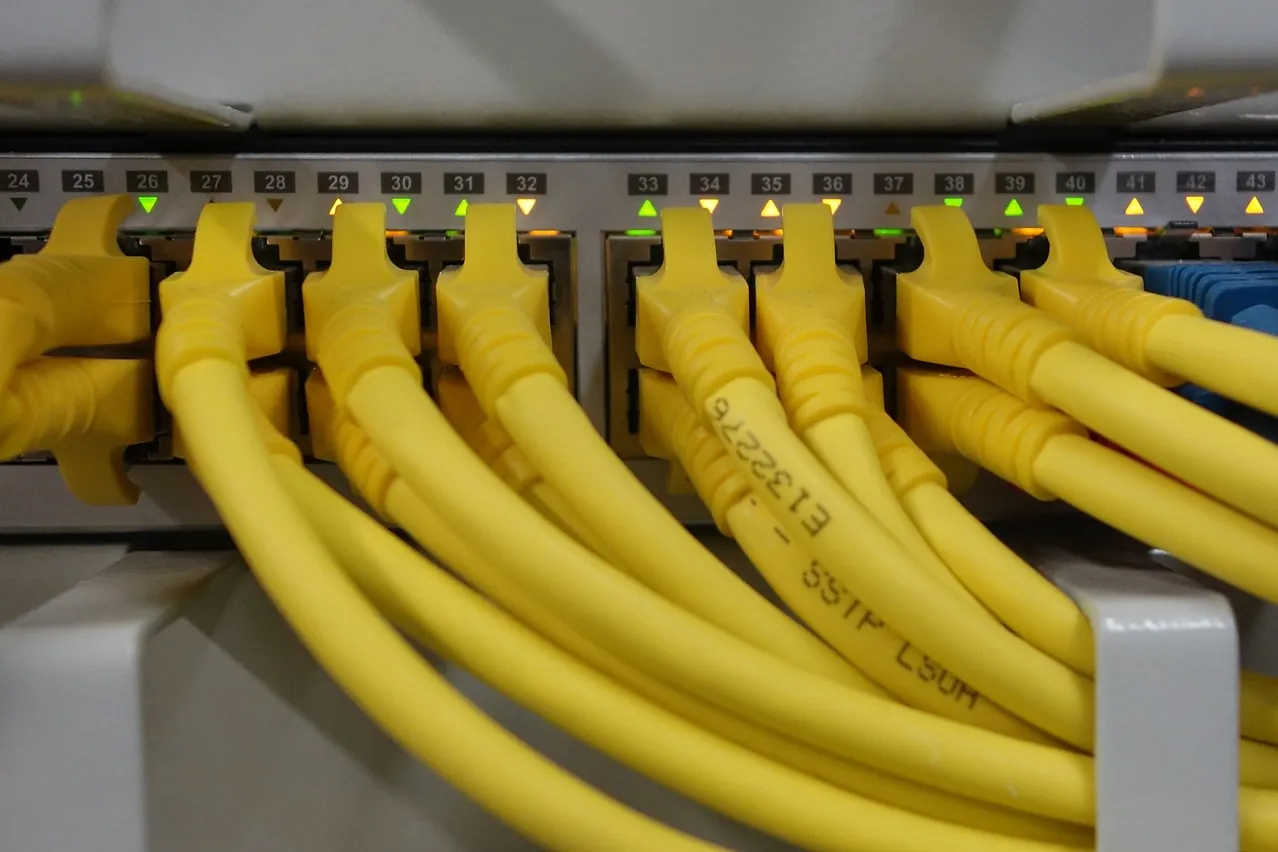
Photo: blickpixel / Pixabay
-
Built the company's first observability dashboard
Developed and launched the company's first observability dashboard, providing real‑time system performance insights and data visualization on the large office TV.
-
Ran 10 PostgreSQL and MS SQL servers on Ubuntu
Designed, deployed, and maintained 10 PostgreSQL and MS SQL servers on Ubuntu Linux VPS, ensuring optimal server performance and reliability.
-
Wrote 1,000 RBAC rules to secure Linux servers
Enhanced data security by implementing 1,000 RBAC rules for developers, application instances, PostgreSQL, MS SQL, and other Linux servers, preventing unauthorized access; documented with Ansible automation.
-
Managed 30 Ubuntu Linux VPS instances
Managed 30 Ubuntu Linux VPS instances, implementing disaster recovery strategies and ensuring optimal network configurations.
-
Managed 8 WireGuard and IPsec VPN connections
Managed and troubleshot 8 WireGuard VPN and IPsec VPN connections, ensuring secure communication across Google Cloud and Linux systems.
-
Administered network infrastructure
Administered network infrastructure for over 1,000 servers, ensuring optimal system deployment, security, and troubleshooting.
-
Automated SSL/TLS certs for 100 Docker apps
Automated SSL/TLS certificate creation for 100 Docker applications, ensuring secure connections across Ubuntu Linux hosts.
-
Administered 100 Bare Bone servers
Administered 100 Bare Bone servers, physical networks, and IP telephony systems, ensuring robust infrastructure for company growth.
-
Administered 40 websites on Apache and Nginx
Administered 40 websites on Ubuntu Linux hosting servers with Apache and Nginx, ensuring high availability and performance.
-
Ran 24/7 support for ~1,000 IPTV/OTT servers
Provided round‑the‑clock 24/7 infrastructure support for an IPTV/OTT streaming platform, administering ~1,000 servers plus client‑owned systems for global customers in China, the US and Germany.
-
Kept IPTV streaming signals running non‑stop
Ensured uninterrupted delivery of IPTV streaming signals between suppliers and clients, monitoring and maintaining the streaming network and IP telephony around the clock.
-
Diagnosed and repaired laptop hardware
Diagnosed and repaired laptop hardware — screens, hinges, keyboards, trackpads, motherboards and power — and resolved software issues across Linux, Windows and Mac.
-
Servers you can rebuild from scratch
Built the company's own infrastructure as 19 Ansible playbooks and 34 roles across 12,065 lines of YAML, converging a live host to a declared state with every play idempotent.
-
A whole company on one small server
Ran the whole company on one 512 MB single‑core host — a git forge, a web server serving seven domains, Tor, two alternate‑protocol servers, backups and intrusion banning — by treating 464 MB of usable memory as the binding architectural constraint.
-
Three locks on the door, none of them locked
Found and closed three SSH brute‑force protections that had never worked: a ban jail watching port 22 while the daemon listened on 1986, a rate limit shadowed by a broader rule above it, and a ban action whose binary never resolved, so no ban had ever applied.
-
Hardened SSH to 24 validated directives
Hardened SSH to 24 asserted directives with three‑stage validation — the candidate file, the assembled config, then the daemon's own read‑back — after the read‑back caught the running server silently overriding two of the twenty‑four.
-
Proved the intrusion ban works every run
Proved the intrusion‑banning path end to end on every hardening run by banning a reserved test address, reading the resulting kernel rule and unbanning in a guaranteed cleanup block, so a jail that stops working fails a run instead of reporting healthy.
-
Verified firewall rules by position
Verified firewall rules by position rather than presence, reading the numbered rule list and the live packet‑filter chain, because a rule that exists is not a rule any packet reaches.
-
Backups that have actually been restored
Built encrypted off‑host backups on restic with retention pruning, an integrity check and a monthly automated restore drill, then audited the recovery position and wrote down the gaps rather than leaving them to be found during an incident.
-
Built dead‑man's‑switch host monitoring
Built dead‑man's‑switch monitoring that pings only while memory and disk are healthy, so a degraded host raises an alert by going silent — and caught six variable names saying "free" where the check correctly measured "available", an order of magnitude apart on a 464 MB box.
-
Made Ansible check mode tell the truth
Made check mode tell the truth across the whole platform after finding six probes deciding on a value the host never gave, because Ansible's command module reports success under --check while skipping the command entirely.
-
Cut systemd sandbox exposure on every unit
Cut systemd sandbox exposure across every unit this platform installs — a dead‑man's‑switch service from 9.6 UNSAFE to 1.5, an internet‑facing git forge from 8.3 EXPOSED to 1.5 — and added a converge‑time parser check after finding a misspelled directive silently ignored in three unit templates.
-
Built 7 read‑only host reporting roles
Built seven read‑only reporting roles that render a live host to Markdown — facts, access, git, metrics, traffic, security and provider inventory — under a rule that no number is printed the run did not measure.
-
Your code on your own hardware
Deployed the company's own git forge on Soft Serve, private by default with no web panel and its SSH port bound to loopback behind a jump host, and made the landing page in front of it a build artefact of the main site rather than a hand‑kept copy.
-
Ran containers on Podman and Quadlet
Deployed a container plane on Podman and Quadlet under systemd rather than Docker, because Docker publishes container ports above the host firewall's own rules — and gave deploys an unprivileged user with one fixed command instead of root.
-
Split every operational secret per host
Split the four per‑host operational secrets after establishing that two hosts sharing one dead‑man's switch alert less than two switches, not more, and that a shared backup passphrase makes two hosts one repository.
-
Rehearsed the forge CI hook, found 2 defects
Rehearsed the forge‑side CI hook and found two defects unreachable by reading the file: a fallback that put an unresolvable argument on the hook's input, and git's own environment variable following the gate into the checkout and turning 19 tests red.
-
Published a readable Tor onion mirror
Published the site as a Tor onion mirror on a readable address beginning engineer, with the key generated off the host so it never reached this repository or a laptop, and left it the one front door of four that is never counted.
If this is the work you need done, the next step is a conversation.
Tell us the problem and we will tell you honestly whether we are the right people.
This work is part of what we offer as System Administration, Infrastructure as Code, Security & Access Management, Site Reliability & Monitoring, Networking & VPN Setup, DevOps & CI/CD Automation, AI Agent Security and Backup & Disaster Recovery.
 Building something that needs this? Get in touch.