Built the visual identity from 2 drawings
Built the company's icon and favicon sets from two hand‑made drawings, with every derived asset regenerated by script and a check that fails when a derived file was committed before its source.
Work carried out: July 2026
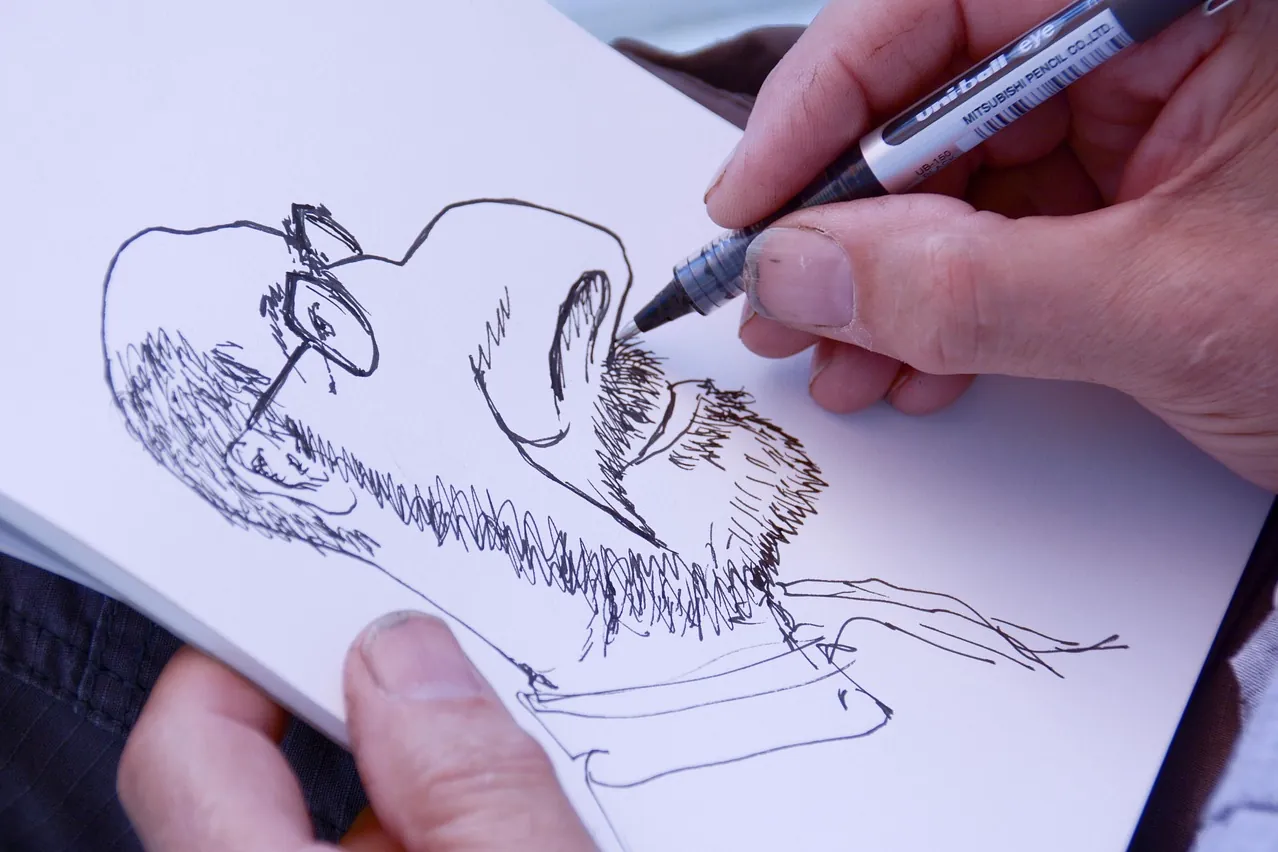
Photo: Rudimaes / Pixabay 
Photo: Pexels / Pixabay
two drawings behind every icon the company ships
Situation. A small company’s visual identity is usually bought, generated, or assembled from stock, and the result is an identity that belongs to nobody. The alternative problem is worse: hand‑made artwork that exists only as exported files, where the source drawing is lost, the exports are edited directly, and within a year the versions in use disagree with each other and no original remains to settle it.
Task. The identity had to be drawn rather than sourced, and the path from drawing to published asset had to be reproducible, so that every file on the site is derivable rather than kept.
Action. The generated artwork began with two hand‑made drawings: the company mark, a raster, and a vector cog drawn for the browser tab on the argument that a bold silhouette survives 16 pixels. Rendered side by side at 16, 32 and 48 pixels over light and dark tab strips, the mark stayed recognisable and the cog washed out, so the tab icon moved to the mark, and every icon the site publishes is now produced from that one drawing. From it, scripts produce every derived form: the favicon set in its required sizes, the touch icons, and the launch images at each device size. The generation is a task anyone can run, so the question “where did this file come from” has an answer that is a command. The staleness check is the piece that makes it hold: it compares the commit date of every derived asset against its source and fails when a derived file was committed first, which catches the exact failure this design exists to prevent — someone edits the source, forgets to regenerate, and the published site keeps showing artwork that no longer matches the original. The rule that derived files are never edited by hand is stated where the sources live.
Result. One drawing now produces every published icon, the tab icon included, regeneration is one command, and a stale asset fails the build. The trade‑off is a hard dependency on the toolchain: the derived files are committed so the site builds anywhere, but changing the identity requires the generation tooling to still work, and a source format that stops being readable takes the whole identity with it.
Take a look at the full Portfolio.
One piece of a longer record — and it is all on this site.
Every entry is written the same way: the situation, the task, what we did and what changed.